Friday, June 14, 2013

June Update: The Political Stuff


Greetings once again!

As usual, it’s been a long while since my last post, primarily because I’ve been pretty busy with work in the village. As is also usual, a lot has happened in the meantime, so I’ll make multiple posts to segregate various topics. Jumping right in…

First and foremost, I’ll give you a brief update on the political situation here in Mtwara. As some of you know, the gas issue that sparked rioting in my region in late January has resurfaced. This is the third draft in the last couple weeks that I’ve written to try and explain the situation. Despite the disclaimer on the right side of this page (which I believe gives me a reasonable leash to voice my opinion), I feel some obligation to inform of the situation without editorializing; I’ve thus far been unable to do that, but I’ll try again…

Some time ago, a large field of natural gas was found off the coast of Mtwara (my region). Since then, there has been hope among Mtwarans (who have long lived in one of the most underdeveloped areas of the country) that the find will bring money and industry to the region, creating jobs and boosting development in the process. The Tanzanian government, however, has made it clear that it wants to build a pipeline from Mtwara to Dar es Salaam for processing, where the infrastructure for such already exists.

Disgruntled Mtwarans began public demonstrations against this plan in December in Mtwara town (while we were in town celebrating Christmas, as it happens; this was the first time the issue came to my attention). Peaceful demonstrations were commonplace over the course of the next month until things became violent in late January, when rioting broke out in Mtwara on the 25th and in Masasi and Newala on the 26th. Following this, the government began a major public relations push to convince Mtwarans that there had been a misunderstanding about the pipeline plans; the government also highlighted plans to bring various industries to the region. At some point during this period, many (I would argue most) Mtwarans gained the impression that the government had scrapped its plan to build the pipeline (although I have never been able to find any evidence supporting this belief).

Things remained relatively quiet until mid-May, when the government was due to release its annual budget. The budget would reveal the government’s plan regarding the pipeline, so Mtwarans stopped everything they were doing (literally) to pay attention to the announcement. (We began receiving texts from Peace Corps on the 16th informing us that protests were expected and to avoid town (naturally I was in town). Didn’t take much to figure out what the announcement was going to be.) The announcement was originally slated for the 17th, however it was eventually postponed.

On May 22nd, the government released its budget. The gas pipeline would continue as originally planned before the rioting; Mtwara would get 0.3% of the profits from production charges and additional development would come as a byproduct of private investment in the region (a politi-speak way to say that the government had no plans to commit to development). Before the budget announcement was finished, many of the angry and largely-unemployed youth of Mtwara town were throwing bricks and burning buildings.

The bulk of the rioting in Mtwara town lasted two days this time around. The military came in on the 23rd to quell the issue. Damage estimates vary, but dukas were looted, homes of government and police officials were burned, roads were barricaded and a bridge was destroyed. Police are saying three people (including a pregnant woman) were killed, but an independent human rights group and Mtwaran citizens are saying that at least twelve died (not yet verified, as far as I know). Mtwarans are also saying that, in the aftermath of the riots, police retaliated by burning homes and acting otherwise with impunity. Verifiable information is all but impossible to come by in Tanzania, so distinguishing what actually happened is difficult. In any case, trust between the police and the public has eroded completely, although I’ve seen nothing to suggest the public feels that same way about the military.

On the weekend of June 8th, I traveled to Mtwara town with Stevie, the Volunteer with whom I was caught in the Masasi riot in January. The situation in town was still tense; platoons of soldiers were packed into huge lorries and armored personnel carriers could be seen rumbling through the streets.
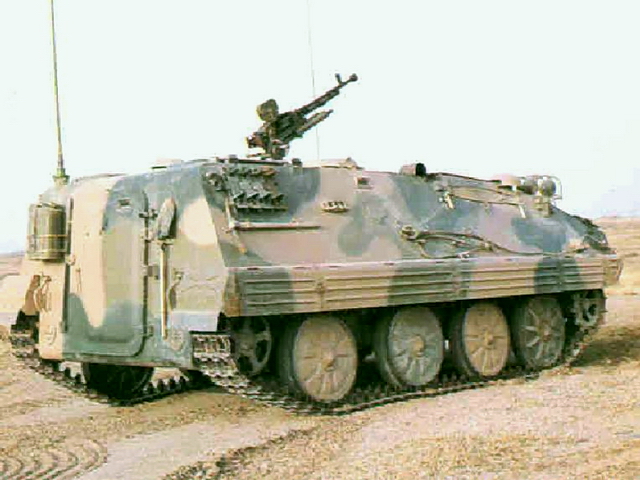
APCs somewhat like this were patrolling the streets.
 The night we arrived, the Member of Parliament for Mtwara town was arrested by police; they claimed he had a role in inciting the violence. He was due in court on the 10th of June, along with 91 others arrested during the rioting. We intended to leave the morning of the 10th, but were informed on June 9th by Peace Corps that some Mtwarans were planning a demonstration to prevent traffic from leaving town. After weighing options and considering advice from multiple angles, we spent the majority of the next day sitting in a guestie playing videogames, reading, napping and, in my case, repeatedly searching ‘Mtwara’ on Twitter. What little we did see outside suggested a heavy police presence intended to deter any trouble before it got started. Still, virtually every duka and bar was closed in anticipation of a disturbance that never came (although there was apparently an issue in Newala). When we finally did leave on the morning of the 11th, each bus out of town had a soldier on board.

So that’s it. The gas issue in Mtwara is one of three hot issues in Tanzania right now (the others being the redrafting of the Tanzanian Constitution and the reformation of the failed education system). How it is handled will have broad implications for the allocation of benefits from the country’s natural resources, so there are strong opinions on either side. Right now, the Tanzanian government is pretty adamant about building the pipeline, while many Mtwarans remain just as adamant that the pipe should not be built.

That’s about all I know to this point. Any guess as to how long until the issue resolves – and what that means, exactly – would just be speculation. I’ve simply resigned to the fact that we’ll probably be dealing it for the duration of my service. No worries, though: Peace Corps has a pretty solid security apparatus to keep us informed on what they know; I’m in good hands.

Here are some additional links on the Mtwara situation:

'The Untold Story of Tanzania's Resource Curse' - Think Africa Press; The best article I've read so far on the situation.
'Chaos hits Mtwara after gas project confirmation' - The Citizen; An article covering the rioting the day after it began.
'Could Mtwara chaos have exposed police brutality, impunity?' - The Citizen; An article analyzing the police response to the situation.
'LHRC disputes Mtwara toll' - The Citizen; An article covering LHRC's claim that at least 12 people died in the rioting.

Note: The Citizen is a local English-language newspaper. It's one of two major English-language newspapers in Tanzania, the other being The Daily News. The Daily News tends to represent the government viewpoint while The Citizen tends to be more critical (it may well be affiliated with the opposition; I'm not sure). Neither of them is of great quality, so read with a critical mind.

On to other, happier stuff…

June Update: The Work Stuff

Now that I’ve got the political situation out of the way, on to the work front…

The last time I posted, I was in Mtwara town for super-regionals and malaria training. Super-regionals is a one day conference where Volunteers in neighboring regions get together to brainstorm ideas, share contacts and refocus objectives. It was far more productive than I’d have imagined had someone just explained the concept to me. Malaria training gave us a refresher on Peace Corps’ malaria initiatives, including a major partnership with Johns Hopkins University’s Bloomberg School of Public Health, which is in the process of a major bed net rollout in Tanzania’s southern regions (Mtwara, Lindi and Ruvuma).
My counterpart during our first PataPata session.
Most of the work I did immediately after super-regionals and malaria training was related to the bed net rollout, namely holding PataPata sessions at the local primary school and distributing promotional materials around my village, neighboring villages and one of the neighboring wards. PataPata is a malaria education radio program that teaches about proper maintenance and use of a mosquito net, along with facts about malaria and other health topics. Each session involved listening to an episode of PataPata, me asking students a series of questions relating to the episode, an exercise lead by my counterpart followed by another series of relevant questions or a game designed by me. We did ten sessions overall, averaging 158 students per session – pretty nifty!
My counterpart working with the students on an exercise.
Johns Hopkins also offered to bring in a mobile video unit to the villages of interested Volunteers. Signing up was a no-brainer. During the event, hundreds of villagers crowded into the market to listen to music, watch the video and play a malaria-related trivia session afterward for prizes. After my video night, I spent a couple days riding around to other nearby sites to record the events. I’d say it was a wild success.

See? Someone actually got a picture of me!
May also saw me teaching sessions about malaria prevention to pregnant mothers at the zahanati, and I’ve been using June to teach nutrition, emphasizing proper nutrition especially for pregnant and breastfeeding mothers. I intend to teach Life Skills (decision-making, safe sex, etc…) at the primary and secondary schools in July with my counterpart. And as usual, I’ve been teaching English to primary school and out of school children (still working on getting the secondary school to let me start an English club). I’m also working on little cards with information on nutrition and basic English, so students have something to reference (books are prohibitively expensive).

The front of my crowd for the video night.
And, finally, I’m still working on the market/pit latrine project with my village leadership. We’ve held a number of meetings, formal and informal, regarding the construction and maintenance of the market, how it will positively impact those living with HIV/AIDS, how much the community will contribute (I’ve got them to commit to 47% right now, nearly double the minimum). This is a huge project that should have a permanent, positive nutritional and economic impact on the community, and I’m hoping it will also open the door for my big (and relatively inexpensive) mural project later down the line.

Me with Jacob, who was in charge of the video unit.
That’s what’s keeping me busy on the work front. Other Volunteers in the region are working on conferences for girls empowerment and income generation, both of which I’d like to participate in, so we’ll see where that goes when the time comes.

Next post…

June Update: The Living Stuff

I’ve now been in Tanzania for nine months – almost a year. That’s absolutely unbelievable – it doesn’t feel at all like nine months since I said goodbye to family, friends and every other comfort I’d known to come to this world of strange people, strange languages, strange customs and strange lots of other things.

As much as I feel like I’ve grown accustomed to being here, it’s still surreal when I stop to think about where I am and what I’m doing. When I sent in my initial Peace Corps application nearly two years ago, over a year out of college and working a job that doesn’t require a high school diploma, I was stuck at a frustrating juncture (despite loving the people I worked with) and uncertain how to move forward. Even after I’d accepted my invitation and knew where I was going, I had doubts as to whether or not I would be effective (given that I was supposed to teach health with an English degree).

But here I am. Now, nine months after the goodbye( for now)s in Columbus and the hellos in Philly and six months after the stress test in Muheza, I’m sitting lazily in my dusty, rural Tanzanian house on an introspective quest to figure out what my time here has changed about me – preferably before my laptop battery runs out. Why am I on this quest? Because I need something to do while I wait for my pizza dough to rise. Yeah, that’s right, I’m making pizza from scratch. Four years at Pizza Hut in the States and I had no idea until I came here how to make pizza from scratch. No mas; check that off the list; I make the best pizza for a hundred miles (mostly because I make the only pizza for a hundred miles).

Although baking is a pretty common Volunteer hobby, I never thought I’d pick it up. But I finished the PataPata sessions two weeks ago and that took a big chunk out of my schedule. I’ve lost a considerable amount of weight, and dedicating some time to making food means I also get to dedicate time to eating it. Not bad. Also, delicious.

Pizza.
Finding ways to kill time is still the big challenge. Not so much finding ways to fill the day, but finding ways to use time effectively to accomplish what I want to get done within the timeframe I’ve given myself. The days are still long (well, not so much – it’s technically winter here), but because getting anything done requires a bigger time commitment than in the States. Washing dishes, doing laundry, sweeping, cooking, bathing and other everyday things are much less convenient than back home. Getting anything done with teaching usually requires half a day, and more time is spent waiting for people to show up to village meetings than at the meetings themselves.

Jiko oven.
But while I would have complained about the inconveniences nine months ago, I realize how very much accustomed to them I’ve become in the time since. That is to say, they’re no longer inconveniences; you guys in the developed world are the weird ones. Washing clothes means me washing clothes. It means an hour soaking dirty clothes in soapy water and ringing them out twice, then soaking them in clean water and hanging them on a line. My homestay mama would be so proud. The idea of using a washer and dryer is completely foreign to me at this point – press a button and then what? Wait? Poppycock!

Shower.
I do dishes by hand, sweep using something called a broom, Gerry-rig an oven when I want to bake, bathe on less than three liters a day (thanks to my handy-dandy hole-in-the-cup method for conserving water), sleep under a mosquito net and, rather than freak out when I realize there are literally ants in my pants because they got on my clothesline, I just sigh and keep typing (as I am now). Also, I love my housebat.  And none of these things seems unusual anymore.

Housebat.
The biggest challenge when it comes to time is finding an equilibrium that isn’t overwhelming. When I first got to site, my biggest concern was worry over whether or not I was being productive for my village; now I’m just trying to make sure I don’t overwork myself. The goal with PataPata was to design and teach a lesson every possible school day (fortunately, a good bit of each lesson was already designed by Johns Hopkins). For a couple weeks in mid-May, my days consisted of either traveling to nearby villages (or the neighboring ward) or teaching at the zahanati in the mornings, then teaching PataPata in the afternoons, then putting together the next day’s PataPata that night, all while trying to ask questions about and negotiate the budget for the market project. And don’t forget teaching English on a (currently) irregular basis. I wouldn’t say it was overwhelming, but I didn’t leave much time for myself and it was a particularly stressful period; it certainly isn’t a pace I could maintain for the remainder of my two years. So now I’m allowing more time for myself, thanks to baking. (I also plan to read more, relearn German and teach myself French, thanks to my new library of Spark Charts.)

Time aside, the biggest overall challenge I’m probably facing at the moment is a growing lack of patience. Highs and lows are normal and surprisingly predictable – they gave us charts at PST and IST showing where we’d be at what point – and as it happens I find myself in the middle of what is probably an emotional low. On a day-to-day basis I feel perfectly fine, but I’ve noticed that I become easily agitated and increasingly impatient (actually, I’m always impatient, but in this case to the point of being unjust), usually measured by how frequent I reach for the iPod to block the world out. A trip to town with other Volunteers usually involves hours-long vent sessions about petty things – or perhaps things that really deserve to be criticized, but still bring me down because of the negativity (that I myself am contributing to). I have failed miserably to see the cup as half full for the last month or so, and while I’m not going to kick myself too hard for it, I do plan on putting a little more effort into the positive spin.


So there’s some rambling for you. A little bit of everything: the good, the bad and the ugly; not in that order.

Before I close up, a few more things:

First and foremost: Mother’s Day was between this and my last post, and Father’s Day is in a couple days, so I’d like to say (here come the adjectives)…

My beautiful, loving, wonderful mother, Tonia, is approximately five-feet, short-inches tall, but she’s one of the strongest people on the planet. Life has confronted her with some of the toughest trials anyone should never have to face and through it all she has never been anything less than the consummate role model for my sister and undeserving me. I don’t know how you do it; I love you Mom!

My beautiful, loving, wonderful step-mother, Natalie, is a mother to me – “step” nothing. She put up with an ungrateful brat of a me from an early age and has been an unwavering source of support ever since. Thanks for being there for me and for being a most worthy best friend to Dad; I love you Nat!

My incredible, loving, wonderful father, Jack, is a consummate symbol of hard work, humility and sacrifice. He put his goal of becoming a firefighter on hold to work at a Honda plant an hour away to support my sister and I, and then gave that job up to be near us. He gave up his dream, but became my hero. If I’m ever half the man you are, I’ll be blessed; I love you Dad!

My incredible, loving, wonderful step-father, Tom, is on his second Father’s Day with me and I can’t wait for the many more that are to come! He is one of the friendliest and most supportive people I know. I can’t imagine a more worthy best friend for my mother. I now know how Mom does it; I love you Tom!

I joined Peace Corps because I believe that sacrifice is the greatest human quality. All four of my parents taught me, not just explicitly but through their actions, that to give of yourself for the benefit of others is the greatest act a person can commit. I’m not sure I believe in altruism, but sacrifice is as close as it gets. I am incredibly blessed to have such roles models as I do. I love you guys!

Finally, one more thing: a big thanks to parents and friends (including the Duck Police and the Pizza Hut crew) for the packages and letters! I read them all and they’re deeply appreciated. Hoping to reply soon!

Until next time, tutakutana siku nyingine.

Sunday, April 28, 2013

Post-IST; What's up.


Greetings all!

It’s been well over a month since my last post. IST is long over and now I’m in Mtwara town for Mtwara/Lindi’s superregional conference and malaria IST. I’m not entirely certain what that entails, but it’s an excuse to spend the better part of a week on the coast; I won’t complain.

On to what’s going on at site…

My first three months at site were spent learning about Mkululu, meeting its inhabitants and trying to brainstorm solutions to some of the problems they face. What I learned during that period culminated in a report that was presented at IST.

My primary health-related objective in Mkululu is to raise awareness about local health issues. HIV/AIDS is obviously the primary health concern in Tanzania in general, but my region also has one of the highest malaria rates in the country (and, to exacerbate the problem, a high rate of malaria misdiagnoses). The mortality rates of small children and women during delivery are also alarmingly high, so Peace Corps is making a major push on mother and child health (MCH) programs. And waterborne illnesses, which happen to be a significant cause of infant mortality, are also a huge cause for concern. Developing sustainable programs and projects (i.e., programs and projects that survive long after I’ve left Tanzania) to raise awareness about and provide solutions for these issues is going to be my main focus.

The Mkululu zahanati, where I'll do a lot of my health-related work.
Education has always been close to my heart, so I’ll be spending time working in that area as well. (I was originally nominated to teach English as an Education Volunteer.) The education system in Tanzania is generally considered a failure. In my village, the secondary school has had only a few students score Division Four (20-40%; not a typo) on their Form Four final exams; everyone else has scored Division Zero (0-20%; fail). Nationally, over half the students in the country scored Division Zero in the last round of exams. You need Division Three (40-60%) to qualify for the lowest-tier colleges, but even those who qualify to attend (again, no one in my village) typically can’t afford to go; financial aid is virtually nonexistent. I’ll cut short what might otherwise end up being an endless critique and simply say that this applies only to the lucky few who make it as far as secondary school – most schoolchildren in Tanzania drop out before finishing primary school. (And, I’ll note before moving on, most of those who drop out are girls. My primary school’s gender ratio is 1:1, but the secondary school has twice as many boys as girls. Gender equality is a huge concern.)

So I’ve got plenty to keep me busy. Suddenly the 21 months I have remaining here doesn’t seem like enough time to rid the world of all its problems (my original plan). But I’ve got plenty of time to help improve the quality of life in Mkululu.

The village is in the process of planning a market expansion project and has asked for my help. Currently, the market consists of a large open space with a hodgepodge of dukas and a pharmacy. The village wants to put in an office for the market committee, build a butcher shop and add a covered market to the open space. For my part, I’ve proposed building a public pit latrine in the market area. This obviously protects the sanitation of the market area, but public latrines are legally required to hold a market day, which would bring money into the village from around the ward.

But pit latrines are common projects for Volunteers – I’m hoping to do a few projects related to pit latrines. My real baby is a mural project proposal I’m hoping will catch on with the village leadership. I’ve proposed painting large health awareness murals – I’m aiming for at least four (HIV/AIDS, malaria, MCH and water sanitation) – in the market. I think it’s got a pretty good shot, but I imagine it’ll have to wait until after the market project is settled. I think murals are a great way to promote health awareness; even more so in the highest-traffic area of the village using a medium that should last at least a decade. Not counting my chickens though; I’ll keep you posted.

The Mkululu market, where I hope to do at least a pit latrine and mural project.
My other health-related goals right now involve awareness classes and training trainers. A couple
prominent villagers have expressed interest in learning to teach HIV/AIDS awareness, and as it happens I’ve met an HIV/AIDS educator based in Masasi who’s worked with Peace Corps before and has expressed interest in coming to the village. I’m also hoping to convince my cross-cultural advisor (CCA), who’s trained to teach malaria prevention, to train a couple interested villagers to help teach about malaria. Training trainers is a priority because it improves the likelihood that health education will continue after I’ve left the community.

On the education front, I’m teaching ESL to a small group of adults once a week. I want to develop an 8- or 10-week course for adults in the village and I’m using this group to develop the curriculum. I plan to develop ESL programs for primary and secondary schoolchildren, but I want to create separate curricula for those classes using a structure similar to the adult course. Math and science teachers are hard to come by (my secondary school has none), so I also want to do a subjects club (geared primarily towards math and science topics; essentially an unstructured tutoring session) at the secondary school and a puzzle club (mazes, match games, word problems to exercise critical thinking) at the primary school.

Part of an English lesson I'm putting together. No, I can't write in straight lines...
I’m also trying to teach in less formal settings. Just today (the day I’m writing this; not the day I’m posting), a group of Standard 6 (primary school) girls came to my door and asked if I would teach them English. My initial thought was “I don’t want to do this right now;” I’d just returned from the zahanati (dispensary), was tired and had a pile of dirty dishes waiting in my jiko. But obviously saying no to moments like these would be an awful waste of their enthusiasm; it’s not every day that schoolchildren walk up and ask you to teach them English (actually, it is every day; just not the same ones). So I spent about a half hour teaching them how and when to say various greetings and goodbyes.

I’ve also made a habit of giving a piece of candy to any child who comes up and greets me in English. I’ve capped the limit per child to once a week though, as I had hordes of children shouting three times a day outside my house when I first started. Should’ve seen that coming…

That’s what I’ve got going on at the moment. I have some ideas for later down the line, but I can only work on one grant-funded project at a time and I’m busy enough trying to get the teaching situation organized in a way that isn’t going to be overwhelming.

So I’m keeping myself busy. My day generally consists of going to the zahanati or doing housework early; doing teaching- or project-related work for a couple hours in the afternoon; then going out in the early evening and chatting with villagers outside my house, at the fundi’s or around the market. (I’ll also admit to taking the occasional nap around mid-day if the day gets slow.) I’m inside by dusk and usually watch a movie, play an emulator or read a bit before bed. No day is ever the same, but that’s the gist of it.

More tidbits:

I feel like I’ve done an exceptionally poor job of thanking my parents for their unbelievable support.

Thanks Mom, Dad, Nat and Tom! And you too, Grandma and Krysta!

I’ve lost 25 pounds since arriving here.
Twice now have I left my house to meet with my village council and ended up at a funeral.
I have a pretty solid beard going on right now.
I cannot cook beans to save my life.
‘Hate’ is a strong word. I reserve it only for two things: hatred and rats.
Mtwara is still hot. Supposedly it cools down around June and July. We’ll see…
A two-foot monitor (lizard) was sitting in my backyard to welcome me home from IST.
‘The Dark Crystal’ still creeps me out.
I’m low on skittles. And beef steak. And coffee-flavored stuff.
P.O. Box 218, Masasi, Mtwara, Tanzania. (Read: My birthday is May 9th. *hint* *hint*)

That’ll do it for this one. Hope all’s well with you and yours.

Until next time, tutakutana siku nyingine!

Tanzanian Living; Mowing the Lawn

When I made the decision to join Peace Corps and move to Tanzania, I found myself confronted with uncertainty on a level I'd never faced before. Moving to a land almost as far away and unfamiliar as possible from everything I'd known, my mind was loaded with more questions than could be answered before I left. I know many of you shared those questions, which is why I want to do some posts on the differences between Tanzanian living and American living. This post will deal with what I think we can all agree is the first and most important question that comes to mind when thinking about living in an underdeveloped country: How am I going to cut the grass?

The answer: a little tool called a "fyekeo". (I know it's called a fyekeo because the waiter at the hotel I'm at for this week's super-regional/malaria IST just reminded me.)

My fyekeo after cutting (poorly) half this patch of grass.
A fyekeo is a flat metal rod with a sharp, hooked end. You can mow the lawn by simply swinging at clumps of tall grass for a few hours..

It's easier if you pretend it's a videogame.
I've found that mowing the lawn with a fyekeo is the best upper-body workout I've had in-country thus far. Pretty handy considering, as I mentioned in my last post, that I've lost 25 pounds, most of which was muscle mass.

My freshly-cut lawn compared to my neighbors' in the fore- and backgrounds.
But on a more serious note.

World Malaria Day was a few days ago. I joke a bit in this post, but tall grass does actually present a serious problem in Malaria-endemic parts of the world. It may surprise you (it did me) to learn that malaria kills more people every year than HIV/AIDS. And as it happens, tall grass is the primary breeding ground for mosquitoes, which carry and spread the disease. As you can see in the picture above, not everyone is keen to "keep the environment clean" (a Tanzanian euphemism for mowing the lawn), so this is one area in my community where I'm going to have to get to work!

Hope this has been interesting. I'll be sure to post more about Tanzanian living in future posts.

Wednesday, March 20, 2013

Karibu nyumbani; welcome home!

Greetings!

It's been a long month since my last post, but I've been busy finishing a report on my village (VSA) for In-Service Training (IST) in Bagamoyo. I've been at IST the last couple weeks and haven't really had time to post.

It's been great to see everyone from my class after an interesting first three months at site. The first week of training consisted primarily of presenting our VSAs (mine was 39 pages - absurd) and technical training. We chose our own schedule and attended classes that will help us more effectively raise awareness about HIV/AIDS and malaria prevention, mother and child health, environmentally-friendly farming and development as well as how to design sustainable programs that will survive after our service ends next year.

This second week, our counterparts - villagers each of us chose to bring to Bagamoyo for training - arrived. The counterparts received technical training and learned to teach to secondary school students while we got to practice working as facilitators. They'll be the first people we work with in our village, although we'll be working with additional counterparts as we become more active with projects.

The social aspect of IST has been interesting. Some highlights included going to a local professional soccer match, attending a faux wedding set up by Volunteers and visiting a coffee shop in Bagamoyo town that served iced coffee.

I'll probably do a post later on Mkululu, which will give you a better visual of the village where I live. For now, you can finally see my house!

My house. Not my chickens.


My living room after a couple weeks.
My living room just before leaving for In-Service Training (IST).
One of my spare rooms after a couple weeks.
That same spare room now.
The utility side of my spare room.
The jiko side of my spare room.
My other spare room after a couple weeks of nothing.
I turned that room into a small classroom.
My back yard.
My choo, now with toilet paper and a mirror!
My bedroom a couple weeks in.
One side of my bedroom just before IST.
Sean Connery just before IST. My bedroom is in the background.

Overall, I've got a pretty nice house. When I came here, I was expecting a couple small rooms (which is all some Volunteers got). If you look closely at my bedroom, you can see I've added a solar panel (50W), which allows me to charge my laptop about once a day, and that's been a tremendous stress-reliever.

That's all for this post. Hopefully I'll get another post up within the next few weeks.

Until next time, all the best!

Sunday, February 17, 2013

(1 of 3) Meet my guard frogs...

Greetings once again.

Now that I've been at site a couple months, I've had some time to become familiar with my surroundings. While I'll get pictures of my house up in due time, it's still a bit of a mess right now (my fundi likes to take his time; I don't have much furniture). Instead, I've decided to create a few posts to introduce you to the creatures I share my house with (minus the now-dead rat).

First, here are my guard frogs...

This guy guards my front door from the rafters of my porch.
This one keeps an eye on my back yard.
And while the other two take a break for the night, this guy looks out from up high.